12 February 2013

Ruth Caroline Terrass Hiller - Requiem


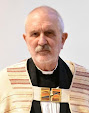
Yesterday, 10 February 2013, The Feast of the Transfiguration, we gathered to remember my mother, Ruth Caroline Terrass Hiller, at St. Paul Church in Oakland, California.  Here are a couple of photos, and a video of the Obituary and the Sermon that was preached on that day.


Rehearsing the Entrance Rite


The following videos are of the Obituary that was read, and the Sermon preached.  The sermon is in two separate files.

The Text of the Sermon follows:

“From Where will my Help Come“
Requiem Mass for Ruth Caroline Terrass Hiller
The Feast of the Transfiguration
10 October 2013

St. Paul Church, Oakland California


Wisdom 3:1-5, 9
Psalm 121
Revelation 7:9-17
St. John 10:11-16

INI

The Ancient Question

From age to age men and women have always had the psalmist’s question before them, “From where will my help come?”  The question at the heart of Psalm 121 also lies at the heart of our living, and our continuing in life.  My mother requested this psalm, and I suspect that it was both her concern and life question as well.  As our world expands, as we know more and more about what we are and from whence we have come; as we see farther than our fathers and mothers saw, and as we descend into the deep parts of existence, we wonder all the more about what our purpose is, and who will help us to accomplish it.  And then there is the simple question of why we are here today – what is our purpose in these ceremonies and words.  Is it death that gathers us today or something more than that?  “From where will my help come?”

The author of the Book of Wisdom is wrestling with large themes.  What is it about death?  Is the end really the ancient understanding of Sheol, a dark place of the dead, or is there something better – something more.  Then he trots out a bunch of words in which we can indeed find some level of help: peace, hope, blessedness, worthiness, understanding, abiding in love.  Are these answers for us this afternoon, and more importantly, are they answers for us as we leave this place, going back into the detail of our lives?  “From where will my help come.” 

For my mother, each of these states was something for which she yearned.  In her final days she was earnestly seeking peace, and had a strong sense of hope.  Her sense of self was that she was truly blessed in her marriage to Carl, her husband whom she continued to grieve, and blessed in the presence of her children.  Her attachment to her family, especially her husband, shines in a text that she asked be read as a lesson.  It is so short that we did not include it as a reading, but I include it here as an insight into her soul.

So Jacob served seven years for Rachel, yet they seemed to him like a few days because of his love for her.” (Genesis 29:20)

She sought a worthiness of life from her religious life that provided for her an understanding of life itself.  In all of these things she abided with God in love.  They were her answers to the ancient question.

An On-going Curse.

Just below the surface in Wisdom’s hope and dialogue about what it means to be alive is the real question of death.  The author wrestles with big questions:  suffering, death, the torments of life, and destruction.  This makes a great deal of sense since the book probably comes to us out of the experience of the Jewish Diaspora, the questions and musings of a people who had left the land of promise, learning to live in a new place, with different ideas.  “From where will my help come?”

Our time changes so quickly and so completely.  When I look at what has been accomplished during the span of my mother’s life I am stunned by all of the change.  For many such change is a joy and a positive aspect about life.  For others change is death in disguise, as civilization hurtles toward an unknown destination.  Think about your attitudes about life.  If you are young then all is possible.  As you age those possibilities begin to diminish, and death becomes more and more visible.

Our age cannot fathom death, and seeks actively to avoid it.  In dealing with the lovely people at the Funeral Home and the Cemetery, I began to be aware of all the exquisite means that were taken to have me avoid death.  It is not only in circumstances such as this, with the death of our mother, that we see death lurking, but also in other matters of life.  Have you ever lost a job or been threatened with its loss? – death.  Have you lost your home or value in your investments? – death.  Have your career goals or life goals been diverted or lost? – death.  Has a look in the mirror reminded you that all is not suppleness and beauty? – death.  Our culture’s answer to this question has been one of denial.  “From where will my help come?”

Resting Assured

The Wednesday before she died, I had lunch with my mother.  As her world continued to implode around her, I sought to find points of interest that would spark a conversation with her.  It was a question about the death of her parents that brought both tears and light to her eyes.  She remembered them in faith.  She delighted in the ordinary things that they did and brought to her life.  She saw Christ in them and hope in them.  And then she wept – taking in her loss, but still having hope. 

I love the question that the Seer, the Divine, is asked by the Elder in Revelation, “Who are these?”  I also like the passage from Hebrews 12:

Therefore, since we are surrounded by so great a cloud of witnesses, let us rid ourselves of every burden and sin that clings to us* and persevere in running the race that lies before us while keeping our eyes fixed on Jesus, the leader and perfecter of faith.

Both of these viewpoints have an awareness of death that moves beyond what our culture and time would have us believe.  It is as the words of the Requiem sharply state, “In the midst of life we are in death” which is followed by the question, “of whom may we seek succor?”  “From where will my help come?” In Hebrews the help comes from the example of the witnesses that so thickly surround us – both dead and living.  We are in a great community that has experienced both death and life.  We are in a community of hope.  What we do here today centers our hope on the Jesus who leads us on and feeds us with life.  It also centers on this community – those who have gathered here, and those who gathered with us in heart and mind to stare down death and to accept the life that is offered to us.

The Gospel for today speaks of a Jesus who knows us.  We struggle, at times, to know ourselves, and to know those about us.  The image of hope here is that there is one who knows us completely, and accepts us completely.  This is a hope that is not a reaction to death alone but to the business of living as well.  Perhaps it is an answer to the question, “From where is my help to come?”

Sometime on the cusp of Sunday and Monday, Ruth awoke, and turned on a light.  It was then that she reached out to continue her life.  She arose, she collapsed onto her knees, and in a posture of prayer she died.  “From where is my help to come?”  In this she serves as an example of how to always be not only accepting of life, but also reaching out for it.  It is also an example of accepting death, rest, and peace. 

In our meal, this afternoon, both the one at the altar, and the one that follows in the  undercroft, let us accept that we are known of God, and that God comes to us in ordinary things, and events, to be our help, our grace, our life.  And then, like Ruth, let us turn on a light – a light for others to see and with which we can see others in their need.  “From where will my help come?”

SDG


09 November 2012

An Evening with Helmie at the Barnes - 9 November 2012


Hermine (Helmie) Kirschbaum is an old friend of mine for some thirty-four years.  We like talking about books, theology, Germany, and life in general.  Whenever I'm back East I make a point of seeing her.  This evening we had a very special visit to the Barnes Foundation in Philadelphia.  The building itself is stunning, forming a new holding gallery for the collection formerly housed in Merion, Pa.


The approach at night is quite breathtaking, with the upper "clerestory" lighted and floating above a mass of chiseled stone, pierced by windows and massive walnut doors.  The enterior galleries, not attempting to mimic the Merion galleries are bright, expansive and suffused with light.  The night we were there a jazz band was playing and people were enjoying a light supper and drinks in addition to the treasures in the galleries.


Dr. Barnes was an enthusiastic and almost obsessive collector, but more about that later.  The collection is framed, if you will on each wall in each room in a symmetrical display that are seemingly chosen at the whim or taste of the collector.  That is the delight or the disturbing nature of both the collection and the display.


A couple of years ago, before meeting Arthur in Berlin, I spent a week in Florence with two separate trips to the Uffizi.  It was there and then that I discovered that I had a distinct distaste for Botticelli.  My visit to the Barnes confirmed my distaste for Renoir.  It seemed that each room had at least four if not more.  The balloon like bodies and "sausage fingers" (Helmie's description) and the pastel pallet have always put me off.  Apparently Dr. Barnes had a great affection for Renoir's work, for the collection is full of his canvases, prints, drawings, and etchings.  However, I proceed too quickly.  I forgot to mention that each wall is assembled in an ensemble, a symmetrical display of disparate elements.  Unlike the Tate Modern which uses the same technique of displaying disparate works, here the elements don't have much to say to each other.  There are simply too many, and the room is a cacophony of color, light, mass, technique, and period.


There are some real delights, however.  I have always enjoyed Prendergast, and there are plenty examples of his work.  His color and imprecise brush strokes make for a wonderful experience for the eye.  And there were some favorites as well.


There are plenty of Picasso's as well, representing most of the periods, but this Arlequino is one of my favorites.  I like the distraction of both of the subjects, each looking off to their own horizon.  The younger seems to mirror the face of a young boy whose portrait we have at home in Paul Gibson's An Angel from Heaven.


It is the detachment from the surroundings, and the fascination with what is out of sight of the viewer that seems so engaging to me.  But there were other things to see.  Lots of Cézanne, Matisse, Modigliani, Braque, and Chirico are there to greet you.  Of special interest are all the Rousseau that are complimented by primitive icons, retablos from Mexico, and American primitives.  One painter, that I had not heard of before or didn't remember was Charles Demuth.  His clipped and precise watercolors were enchanting.


There were some Goya, a wonderful Redon, and several Lipchitz sculptures.  Scattered amongst all of this was Dürer, Cranach, and anonymous German woodcarvings.  Another new name from me was that of Soutine, whose canvases reminded me of Emile Nolde, with their almost harsh pallet and brush stokes, and their powerful story.  


This particular canvas reminded me of a Francis Bacon or Lucien Freud - life with a touch of horror, or a looking beyond the surface.  All in all, it became too much.  I suspect that one has to come back and focus on a few works and avoid the rest, for the time being.  There were several candidates for further study, and there were also those canvases that invited dismissal.  As I observed to Arthur when viewing all the canvases at the Stein Collection at SFMOMA, not all the Matisse that she bought were good.  My advice at the Barnes - pick and choose - and then enjoy.

16 June 2012

More Jam - Thursday and Friday - 14-15 June 2012

In Search of...


Thursday is the last day of the conference and it concludes with a concelebrated mass at All Saints C of E near the Spanish Steps.  A choir from Durham, England is in residence, so our mass has beauty of song, as well as word and sacrament.  It's both lovely and sad, having made new friends, it is difficult to part with them.  Following the mass, Lizette and I go and have lunch somewhere along Santa Croce.  And then we part ways.  I have writing and shopping to do, as does she.  We agree to meet the next day at Piazza Navona.


And so we do at a café near the Neptune group.  We have coffee and talk about the Society and its role in the church.  We also talk about Navona, and the wonderful shops that surround it.  We decide to go to see the Basilica of Saint Laurence outside the Walls.  This means that we have to navigate getting there, which involves a bus trip to Termini, and then by foot to the church, which I remember as being close.  It is not, but on the way we pass Porto Maggiore, and the remains of its aqueduct and ancillary buildings.  Nearby is Santa Croce in Jerusalem, but we resist the temptation, and wend our way to San Lorenzo.


Finally I do something I never do.  I ask directions from a passing priest, and he supplies them, sort of.  It's still some distance, because, unknown to us, we are not taking the hypotenuse of the triangle.  When we get there it's closed.  So its off to lunch in a little restaurant that Barton and I visited in 1989.


So it's the cemetery that we will do.  We wander around and fine wonderful things, such as the Cappuchin tower that marks the spot of their cenotaph and chapel.  I had always thought that it was Fransiscan, and empty.  Now it appears to be finished and honoring another order.

Most of the tombs are Nineteenth Century, and are of a similar nature, but some really stand out.  Here, not in the city itself, I can find Secessionist buildings, such as in the picture to the left.  This had almost a Mayan effect, others were more brutal, or highly ornamented in a stylized way.

Soon our hours pass and its time for Saint Laurence, so we go next door.  The purpose of the cemetery is, Lizette thinks, to be buried in proximity of the saint.  The church is surrounded by the cemetery, and the church is cut into the hill upon which the cemetery is located.


It's a delight to see this fourth century church, magnificent in its simplicity.  There have been some restorations and changes, but not to the extent that we witnessed at Saints Peter and Paul.  Here one gets the effect that early Christian pilgrims would have experienced.  There is wonderful inlay both in the floors, but also in the Paschal Candlestand, the Ambo, and the Pulpit.  Beautiful!  I especially like the ciborium over the altar.  We go down to the crypt, but most of it is gated and locked.  Lizette tries each one, but to no avail.

The portico is painted with the life of the saint, and there are several pagan and Christianized sarcophagi both inside and out.  We linger and linger - it is a magical place.

Finally it is time to go.  We grab a bus into Rome, hoping to get to Santa Maria Maggiore before it closes.  I make a mistake and we get off too early, so we stop for a drink and walk the rest of the "Processional Way".  It is closed when we get there, but Lizette has two more days here.

I notice up beyond the baroque porch a mosaic that I had never seen before.  It is quite beautiful.  We decide to part ways.  I am really tired, and Lizette needs her time as well.  It has been a very special thing to spend a day with her, especially in this context.

I take a cab back to Campo fiori, and go to the hotel to rest and to write.  At nine I go out to have dinner: amuse bouche of lentils, and a separate plate of olives and mozzarella in cream, carciofi alla romana, timbale con fungi, angel, and fruita di bosco con gelato.


I go back to pack and to rest.  Tomorrow is home!

Arrividerci Roma!

15 June 2012

Audience - Wednesday, 13 June 2012

What is a catholic?


It's the American's turn to celebrate Mass, so Lizette presides, I serve as deacon, and John and Barry read and serve at the communion.  To do this I had to lug my alb and stole across town, but got to walk across Rome in my cassock.  We have to queue up for the audience, and it was somewhat like boarding a LOT flight - every man for himself.  We were led to believe the Audience was particular, but now it is general but at least in doors.  It is very hot.  The one bishop present is soon whisked away to sit in the front row.  We are several seats back but toward the front of the hall.

The "new" audience hall was built by Paul VI, and the architect, I believe, was Pier Paolo Nervi (who was consulting architect on St. Mary's Cathedral in San Francisco).  The hall is huge, seating several thousand people, and at the same time its monumentality becomes almost home-like and intimate.  Right across from us are pilgrims from Vera Cruz, Mexico - they are all done up and have a band.  They are a big hit.  We sit there for a good 45 minutes waiting for the audience to begin, as various groups get up and treat us to music, bands, choirs, small orchestras.  There is an excitement in the air.

Finally, an "organ" sounds, large doors open and in walks the Pope accompanied by Masters of Ceremony, assistants, monsignor, and assorted bishops.  I must say, I was overwhelmed.  Although I find some, if not many of this Pope's policies to be difficult and downright wrong, the enthusiasm of the room sweeps me off my feet.  His greeting to the "clergy men from Southwark Diocese" (they couldn't bring themselves to say The Society of Catholic Priests) is heartfelt, and blessings are offered.  The women in are group are amused to be called "clergymen."  This is an aspect of the Roman Church that all outside of her seem unable to make happen - the embrace of a large segment of the world.  Several language groups are greeted, mentioned, blessed with a little homily and prayer.  It is as overwhelming as is the room itself.

Afterwards we retreat back to our neighborhood, just a block away, and have a very bad lunch at a local bar.  I cab back to my hotel and get rid of alb and cassock.  Later in the afternoon we board a bus and go to the palazzo dori pamphilli where the Anglican Center is located.  The director and his wife graciously greet our group and regale us with "nibbles" and drinks.  It is very enjoyable.  The director is also the Archbishop of Canterbury's personal representative to the Holy See.  Thus David has a very interesting perspective.

Earlier in the day, the director of the Anglican Desk at the Vatican filled us in on ecumenical "progress", such as it is.  It seems that the ordination of women, and the consecration of Gene Robinson has halted any substantial progress, however new talks are slated to begin.  For me it's a glimpse into a new world that surrounds the larger question of what it means to be catholic.  It is good to be in a community that takes the topic seriously.


Earlier in the day, Louis, a priest from Essex, invited me to dinner, and so we leave the reception and have a lovely dinner in the warren of streets west of piazza Navonna.  It is quiet, there are trees and stars, and the menu is quite good.  We talk about what it means to be gay, to be priests, and to be in relationships with understanding and wonderful men.  I have made a new friend.

Later I realize that it is the 41st anniversary of my ordination.  How perfect!

Jam - Monday and Tuesday, 11-12 June 2012

Mixing it up!


With the rising of the Monday sun, I spend some time writing, because I shall have to troop over to the Vatican, or near it for the conference.  I grab a late breakfast, or an early lunch and make my way across the Ponte Sisto, and walk up the Trastevere side up to the Burgo Santo Spiritu, aside the Bernini columns and to the Residenza, where the conference will be held.  It's a slow start and my introverted side is in full gallop.  Slowly I meet fellow priests from the UK, North America and from Australia.  There is small talk and water out on the terrace.

The sessions begin at three and there is a wonderful series of Bible Studies on Paul and Romans by Dr. Paula Gooder.  She has a unique perspective and I shall want to read more of her work.  After Evening Prayer all 90 of troop over to a small restaurant across the street, where the food is quite good, and the conversation difficult due to noise.  After desert I make my good-byes and walk back to Campo.


On Tuesday we begin the day with Eucharist, celebrated by the Autralians.  That is followed by more Bible Study, however, the main event of the day is a trip to Ostia antic, the ancient port city of Rome.  I took Anna there in 2000, and was anxious to go back.  Many call it Pompeii in a part - it's so lush around the ruins.  We take a bus by the airport and then to the site.  It is a lot of walking, but such delights to see, especially if you are into ruins (which I totally am).  The capitol, above is wonderful, and across the corso is the forum with wonderful temples and baths.  There is a stop for lunch and drinks (it is very hot).


When we see the interior workings of the heated rooms at the baths, see the picture to the right, I am reminded of a comment I heard from an American woman on the Palatine the other day.  "The were really a horrible people," she said, but I guess that they did have their inventive side."  What a simplistic view of this culture that was laid out before us today.  Marvelous buildings, warehouses, offices, tenements, bakeries, plumbing and theaters all spoke to a vibrant and diverse culture.  A horrible people, indeed!

We walk past a Jewish synagogue, a Mithraum, and more temples than you can shake a stick at.  There is one nymphaeum that was turned into a Christian church at one point.  Such a jam of institutions.  50,000 people lived here, managing the traffic of trade that entered and left ancient Rome.

My fellow tourists are surprised by the mosaics, which are all black stone set into white.  The example from another set of baths is pictured below, but in the office area of the port, there was a mosaic in front of each office which indicated the enterprise inside.

We make our way back to the buses.  There is more to see back in Rome.


As we enter Rome we go to visit the Abbey of Tre Fontone.   This is a cult site centered on the execution of St. Paul, and consists of three Churches, on abbatial where the monks (Trappists) are singing evening prayer, and one the site of imprisonment (what happened to the Mamartine?) and the third the site of the execution (the head bounced three times).  

My camera has used up all its juice, so I am left camera-less at St. Peter's and Paul's outside the Walls.  Decimated by a huge fire in the latter part of the Nineteenth Century, it was rebuilt, and is a shadow of its ancient self.  The new church is overblown, although there are a couple of interesting features, the ciborium over the altar, and the paschal candle stand, which both seemed to have survived the fire (although Lizette and I are not certain about the ciborium).  There is an "ecumenical" Evensong with the Benedictines, although we don't get to meet them.  It is accompanied by a wheezing organ that needs a great deal of love.  

Upon return, Lizette and I decide to walk to Trastevere to have dinner.  It's a long walk, but there is a delightful conversation.  Along the way we pass St. Egidio Church which was home to the St. Egidio Community.  Started as a protest to the closure of their church, the people of this parish began lay-led services coupled with a social outreach (feeding programs, pro bono legal work, and the like).  The group is now so large that they meet for Evening Prayer at Santa Maria in Trastevere.  We go in for the last few moments of their praying, and the church is packed.  

I don't remember what I had for dinner, but I do remember a rich conversation, and a side conversation with some young people from Chile, who were studying in Germany. Lizette shared our half bottle of wine with them.  I put Lizette into a cab, and I walked across the Ponte Sisto to return home.  What a day.


14 June 2012

Hungry - Sunday 10 June 2012

J. P. Morgan


It's Sunday and after looking at the website for All Saint's Church (C of E) and St. Paul's inside the Walls (Episcopal) I decide on the later.  Unfortunately, The Bishop for Europe has gathered all the rectors in some schloß in München, and has asked that all the parishes have lay-led liturgies.  That means that there is no Eucharist this morning, and I am disappointed.  We read through Morning Prayer, and after it is over I meet other clergy who are attending the SCP conference.

The building, built by J.P. Morgan with major decorations by Edward Burne-Jones, a pre-Raphaelite favorite of mine, is quite lovely.  The apse and the double arches that stand in front of it are filled with mosaic of his design.  They are profound, colorful, and awe-inspiring.  The picture on the right shows the tile work that faces the walls of the nave - quite lovely.  The organ isn't bad and they have an ambitious choir and music program.  One member did tell me, however, that they are tired of Vivaldi (The Four Seasons) but the tourists love it.

Since I'm only a couple of blocks away, I run over to Santa Maria Maggiori, one of the stational churches of Rome.  The mosaics there are magnificent.  When I get there, mass is still being celebrated; so I walk across the street to have lunch.  I'm wearing my collar, and soon find out that in some respects this town can be quite unfriendly to sacerdos.  They refuse to wait on me.  Miffed, I walk to a restaurant nearby and have a caprese.  Back in the church I take a few photos and then proceed up the street.  My goal is to see if the church at Quattro fontane is open.  It isn't

My goal is the museum at Palazzo Barberini, and on my way there I notice a Mussolini building next door.  Three window panel each depict a separate aspect of Rome:  Justice, Fascism, and the Church.  You can see the one depicted as a panel between the two windows that are over the main entrance to the building.  I like the lines, and the statements are unambiguous, if not arrogant.  Interesting, though.  I go into the palazzo.  Only three rooms are open to the public - "Staff shortage".  I decline, and continue up to the Spanish Steps, making a sharp left right before the steps and descend the piazza next to the Spanish Steps.  There is the restaurant alla Rampa, a favorite of mine that I visit every time I am here.  Lunch is vitello tonnato, risotto con fungi, and a panna cotta alla arancia.  It was excellent.

From there I wander home, still a bit tired from my excursion to the Forum and the Palatine Hill.  My feet are feeling it.


I find this little church (little only in Rome) dedicated to the Virgin, where the nuns are singing Evensong.  It is delightful hearing them voice the office and psalter.  I sit for a few minutes and drink it all in.  In time I get up and go to my hotel, and collapse.  Tomorrow will be a busy day.

10 June 2012

Abandoned - 9 June 2012

Just Around the Corner


I am finally learning my way around this quarter, but every once in a while something jumps out at you - like this fountain.  Recognize it?  A copy of this fountain sits in Huntington Park right across from Grace Cathedral.  It knocked my socks off.  There are some minor differences, but it is mostly all there. I slept in late.  I think that I work hard when I travel, and forget the toll that it takes.

Once I get on my way past the fountain is see an open church door - a church dedicated to the Theotokos.  It is quite lovely, and has a program of decoration that is developed around all of the aspects of the life and status of the Virgin.  Here is a door spandrel filled with a Tree of Life, planted by the living water (placed over the baptistery).  i sat for a bit to take it all in.  Sometimes there's too much and your mind misses things.  Better to wait a bit.  So I did.


On my way to the Forum I have a bit of any early lunch at a Pizzeria that Barton and I visited some 23 years ago now.  The outdoor eating area was once covered with netting, but vines have now covered that over, making the place quite pleasant.

The crowds at the Forum are minimal, and I am grateful.  I'm going to be selective in my viewing.  I go to the curia and am delighted to find that changes have been made.  No longer a big, empty room, the floor has been restored, and there is a temporary exhibition of Roman glass.  There are explanations as to the history of the building/room, and its construction and reconstruction over time.  Once used as a church (what wasn't) you can still see traces.  What excited me, however, is the recovery of the platform on which the praeses sat, along with the base of the statue of Victory that had been placed there.  There is also a huge porphyry statue, thought to be Trajan, that was found behind the curia.  They will be uncovering stuff here for centuries.  The road that divides the forum traiano has been blocked off, and will, I suspect, be carefully removed to uncover the history that lies beneath.


I walk over to the house of the Vestal Virgins.  It is quiet in the atrium, lined with the cellar of the women who lived there, and lined also, on one side with the remains of statues of the virgins who kept the flame alive in the past.

Only two of the statues had faces, and I wanted to look at them; to see who it was that lived here, who it was that tended these gardens and devoted their lives to the community hearth.  In the Vth Century the Emperor Theodosius ordered that the whole complex be abandoned - a centuries old community sent on their way.  I imagined the scene.

On the northern end of the atrium they have uncovered, under two other buildings what they think was the original building dedicated to these women and the hearth.  Layers upon layers reveal the human experience here, and the need for a hearth.


As I make my way up to the Palatine, I return to the Neronian cryptoportus, a long underground tunnel that connected parts of the ancient palace that stood there.  What is fascinating are the stucco decorations that still exist there.  I wonder if there is a finger-print.

Livia's house in closed.  Augustus' house is closed - pericolo!  The domus grifoni which I visited in 2009 is closed.  I see the door where it is - nondescript and unmarked.  I wonder how many other doors there are where treasures can be seen.

The Flavian Palace is overwhelming, and much of it is closed as well, so I walk down the path that will eventually get me to the exit.  Along the way, however I see some really beautiful and interesting things.


On the hill that descends down tower the circa massimo there is a large stand of olive trees.  As you move along you can glimpse the Colosseum off in the distance, but to all intents and purposed, deep in the midst of Rome, you are in the Latin countryside.  Beautiful.

There is a rock yard that once was a magnificent temple built by the Emperor Elagabalus.  Nothing is left of it other than the foundations.  As I walk toward the east I come upon a vista that towers over the Arch of Constantine, the site of the Colossus that stood to its east and gave the Colosseum its name, the Colosseum itself, and the hills with the domus aura beyond.

There is a covered area, and below it are ruins recently uncovered.  Suetonius writes about a "revolving" dining room that the Emperor Nero had built.  Most thought that it was an exaggeration.  Here, however, seems to be the foundations for a circular room, below which was machinery and structures that may have supported such a room.  Fascinating.


I am thirsty beyond belief, but I trudge on wanting to see, finally, the back-to-back temples dedicated to Roma and Venus. Originally a blank wall separated to the two cellar that held the cult figures of the two goddesses.  Later, two apses were built back to back, as seen in the picture to the left.  Only a small fragment remains of the Roma figure, and a great deal of her temple was encroached upon by a church.

Thirst over takes me, and I go to one of those tourist places by the metro.  It's a coke and a hot dog.  Sugar, salt, fat, and water - oh, and some carbonation as well - it's all that I needed at that point.  Even though I have been selective, I've spent a great deal of time in the forum, and I begin to wend my way back to the hotel.  I need more water and have a granita limone as well.  I sit and savor both.


I spend a little time at the Trajan complex.  By the Trajan Column, you can see the puzzle that the archaeologists have to deal with here (and everywhere, really).  There are buildings upon buildings.  You can see the foundation stones that sit below the foundations of the buildings that surrounded the column.  What a wonder it is for those who uncover and decipher this stuff.

I'm exhausted.  No supper, just writing and bed.